Bank auction shops are among the most sought-after listings in the commercial auction market. A well-located shop can earn steady rent from pharmacies, banks, food outlets and retail chains, and its value tends to rise with the neighbourhood. When shop owners default on business loans or loans against property, lenders sell these units through SARFAESI e-auctions, often at prices below the open market.
The best bank auction shops offer both yield and appreciation. The worst come with difficult tenants, unapproved use or years of unpaid dues. This guide shares 10 profitable tips to tell the two apart and to bid wisely.
Why investors love bank auction shops
Retail property is priced on location and rent. In the open market, sellers of good shops know their value and rarely discount. In an auction, the reserve price follows the bank’s valuation, and competition depends on who notices the listing and has funds ready. That creates windows where bank auction shops sell at yields higher than the market offers.
Advantages include:
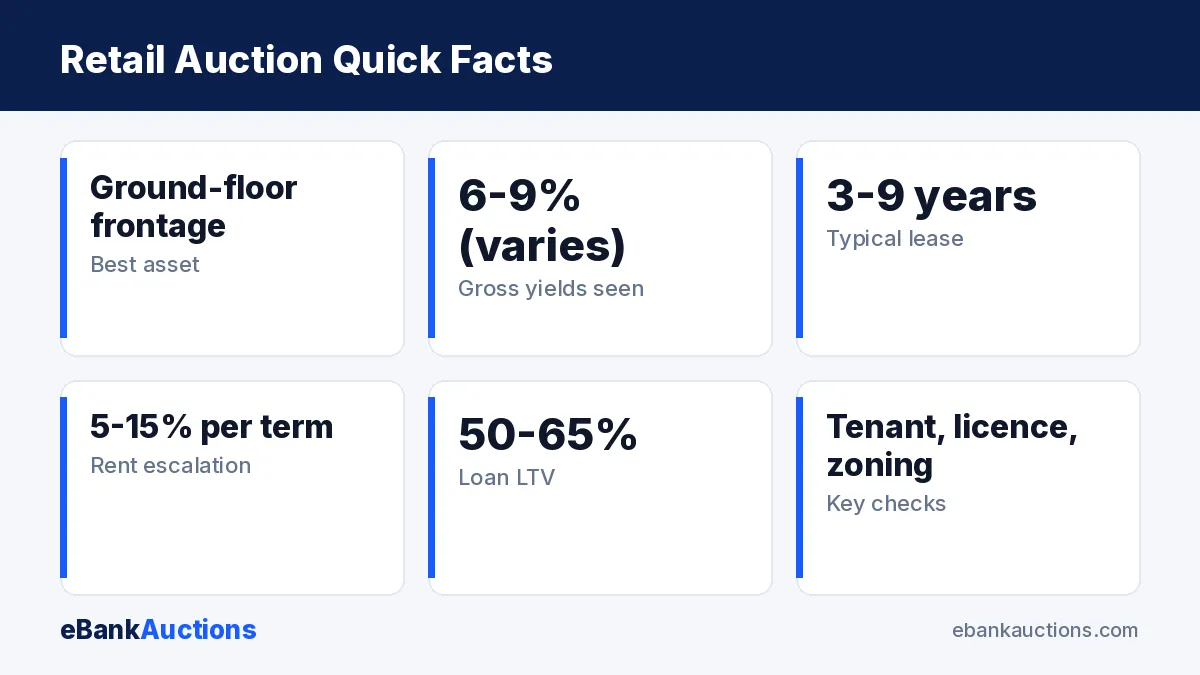
- Higher yields than residential: shops often earn 6–9% gross rent yields compared with 2–3% for homes, depending on city and location.
- Long leases: retail tenants invest in fit-outs and prefer long tenures.
- Tenant-paid costs: many leases put maintenance or utilities on the tenant.
- Scarcity: main-road frontage is limited, so good shops hold value.
Types of retail units you will see
- Ground-floor shops on high streets and market roads.
- Showrooms with large frontage on arterial roads.
- Units inside shopping complexes and malls.
- Basement and upper-floor shops, which are cheaper but harder to lease.
- Kiosks and small counters in commercial buildings.
Browse commercial auction listings on eBankAuctions to see current bank auction shops in your city.
10 profitable tips for bank auction shops
The tips below follow the order in which experienced investors evaluate bank auction shops, from the street outside to the lease you finally sign.
Tip 1: Location beats everything
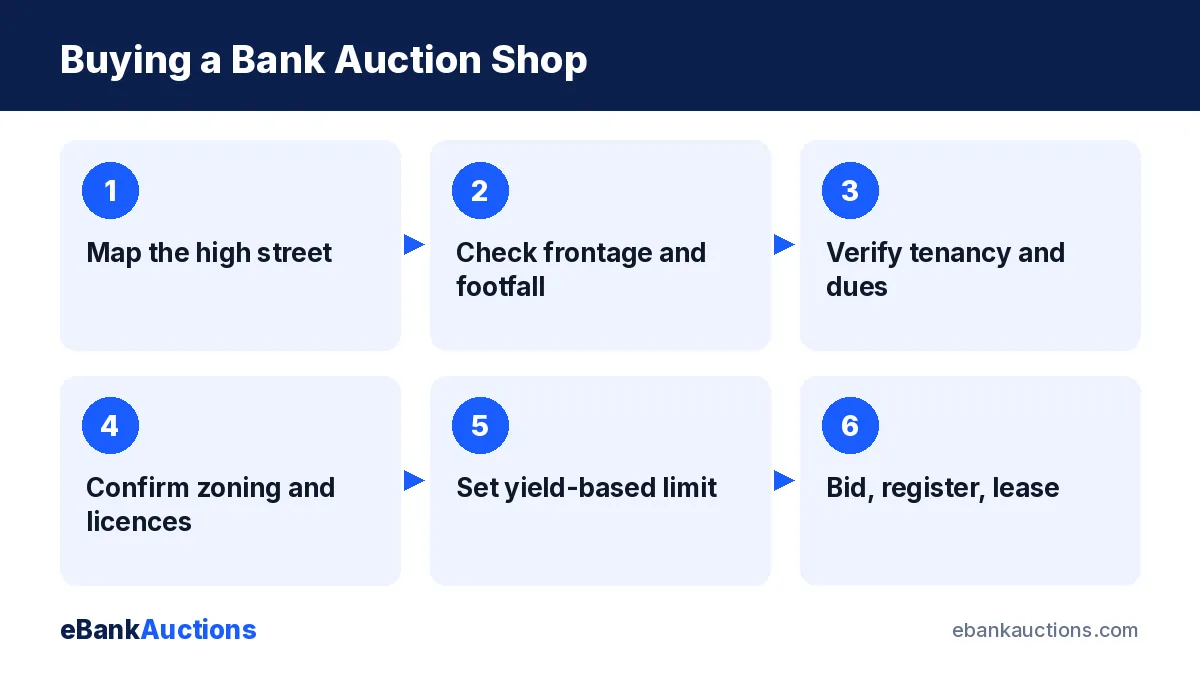
A shop’s rent depends on footfall, visibility and access. Stand outside at different times of day and count people passing. Note the neighbouring shops: a cluster of successful stores signals a strong street. Check whether customers can park or stop easily. A slightly higher price for a better location almost always pays off.
Tip 2: Frontage and floor matter
Retailers pay for frontage. A narrow, deep shop earns less than a wide, shallow one of the same area. Ground floor units command the highest rents; upper floors and basements rent for much less unless the building is a destination. Mezzanines add usable area. Measure frontage and ceiling height during inspection.
Tip 3: Investigate existing tenants carefully
Many bank auction shops are sold with tenants in place. That can be an advantage or a trap. Ask the bank for any lease documents and check:
- Whether the lease is registered and when it started.
- The rent, deposit and escalation terms.
- Whether the tenant pays regularly, and to whom.
- Whether the lease was created before the mortgage.
A long lease at a very low rent created shortly before default is a warning sign. Tenancy claims can be examined by the Debts Recovery Tribunal under the SARFAESI Act, 2002. See our pre-leased property auction guide.
Tip 4: Confirm zoning and approvals
Many shops in Indian cities operate in buildings sanctioned for residential use. Authorities can seal such premises or levy conversion charges. Check the approved building plan, the land use in the master plan and whether any change-of-use or conversion fee has been paid. Also verify the building’s fire NOC if the complex is large.
Tip 5: Check trade licences and signage rights
If you or your tenant will run a business, the shop must be eligible for a trade licence and shops-and-establishments registration. Some uses, such as restaurants or clinics, need additional approvals. Check association rules on signage, working hours and storage. Signage rights on the facade can significantly affect rent for bank auction shops.
Tip 6: Collect all dues in writing
Commercial property tax rates are higher than residential. Add maintenance charges in complexes, common electricity and water. Defaulting owners often leave arrears. Get written statements and add them to your cost. Some associations deny access or services until dues are paid.
Tip 7: Assess possession realistically
If the defaulting owner is still running a business from the shop, getting physical possession can take time. Ask the authorised officer about the possession status and handover plan. Visit during business hours to see what is happening. Our guide on symbolic vs physical possession explains the process.
Tip 8: Build your bid from rent
Use a yield-based calculation:
- Estimate market rent per month from brokers and nearby listings.
- Annual rent minus property tax, maintenance, insurance and one or two months’ vacancy gives net rent.
- Choose your target net yield, for example 7%.
- Net rent divided by target yield gives your maximum all-in cost.
- Deduct stamp duty, registration, dues, repairs and legal costs to find your maximum bid.
Our guide to auction property rental yield shows a detailed example.
Tip 9: Plan finance for commercial LTV
Lenders usually fund 50–65% of a shop’s value through a loan against property or commercial purchase loan, at rates above home loans. Get in-principle approval early and keep a larger own contribution ready than you would for a flat. Read our commercial auction loan guide.
Tip 10: Lease smartly after purchase
Once you register the sale certificate and take possession, lease the shop with a registered lease deed. Prefer tenants with strong brands or proven businesses. Negotiate a security deposit, a lock-in period, rent escalation of 5–15% every few years, and clarity on who pays maintenance and taxes. A good lease increases both your income and the resale value of bank auction shops.
How to research rents for bank auction shops
Rent is the heart of the numbers, so research it properly rather than trusting a single broker.
- Walk the street and note “To Let” boards with phone numbers; call and ask the rent per square foot and deposit.
- Ask two or three local brokers for recent deals, not asking rents.
- Speak to existing tenants politely about typical rents and escalations in the area.
- Check online listing portals for comparable shops, discounting asking rents by 10–15%.
- Adjust for frontage, floor, parking and condition.
A shop’s rent per square foot on the ground floor may be two to three times that of the first floor in the same building. Bank auction shops on upper floors are cheaper for a reason, so value them on their own rent, not the ground-floor rate.
Who rents shops, and what they want
Understanding tenants helps you choose the right bank auction shops:
- Pharmacies and clinics: need ground floor, visibility, water and good power.
- Banks and ATMs: prefer corner or main-road units with strong security and long leases.
- Food outlets: need ventilation, exhaust routes, gas permissions and waste disposal.
- Mobile, fashion and electronics chains: want frontage and footfall.
- Service businesses: salons, tailors, repair shops accept smaller, cheaper units.
If the shop you are considering suits several of these tenant types, it will be easier to lease and re-lease over time.
Special cases in bank auction shops
Shops in upcoming areas
Some bank auction shops are in new developments where footfall has not yet arrived. They can be bought cheaply but may stay vacant for a long time. Buy only if you can afford the wait and the area has clear growth drivers such as a metro line, new residential projects or an office cluster.
Corner shops
Corner units with two frontages usually earn a premium. Check whether both frontages are legally usable and whether signage is allowed on both sides.
Shops with basements
Basements can add storage value, but check whether their use is approved. Many basements are sanctioned only for parking or services, and commercial use may be unauthorised.
Combined units
Sometimes a borrower merged two adjoining shops. Check whether both units are covered in the notice and title, and whether the merger was approved. If only one unit is being sold, you may have to rebuild the partition.
Inspecting bank auction shops: what to look for
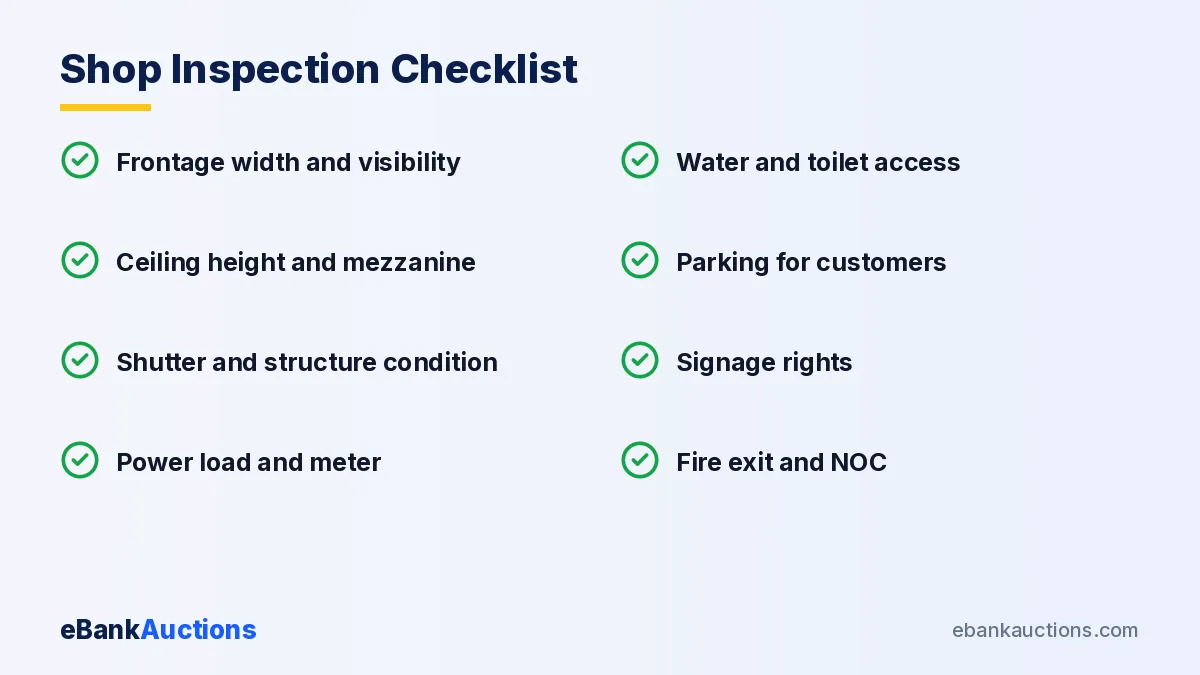
During the inspection window, bring a contractor or engineer and check:
- Structural condition of beams, columns and the slab above.
- Rolling shutter mechanism and security.
- Floor level relative to the road, to judge flooding risk in heavy rain.
- Electrical meter, sanctioned load and wiring condition.
- Water connection and access to toilets.
- Fire exits and extinguishers in the building.
- Condition of the facade and signage area.
Photograph everything and get a written repair estimate. Many bank auction shops have been closed for months and need cleaning, painting and electrical work before a tenant moves in.
Negotiating your first lease
After you win, the lease you sign sets your returns for years. Key terms to negotiate:
- Rent-free fit-out period: 15 to 60 days is common for retail.
- Lock-in: a period during which neither side can terminate, protecting your income.
- Escalation: fixed increases at renewal or every few years.
- Deposit: three to six months’ rent in many cities, more in some.
- Outgoings: clarity on who pays property tax, maintenance and GST.
- Registration: leases above 11 months should be registered, and stamp duty paid.
A well-drafted lease makes bank auction shops far more valuable at resale because the next buyer is purchasing a secure income stream.
Bank auction shops for your own business
Many buyers of bank auction shops are shopkeepers who are tired of rising rents. Owning your premises gives you stability, lets you invest in a better fit-out and turns rent into equity. Before bidding for own use:
- Compare your current rent with the likely EMI plus maintenance and tax.
- Check that the shop suits your trade in size, frontage, power and approvals.
- Plan how you will keep trading during any fit-out period.
- Consider whether a small portion can be sublet to reduce your cost.
A business owner can often justify a slightly higher bid than an investor because the property saves rent immediately and supports the brand. Just make sure the numbers still work if you ever move and lease the shop out.
A quick due diligence table for bank auction shops
| Check | Why it matters | Source |
|---|---|---|
| Title and EC | Clean ownership | Advocate, sub-registrar |
| Building sanction | Commercial use allowed | Local body |
| Fire NOC | Safety, licences | Fire department |
| Lease deed | Income and tenant rights | Bank, tenant |
| Dues | True cost | Local body, association |
| Power load | Tenant suitability | Electricity board |
| Road plans | Widening risk | Development authority |
Comparing high-street shops with mall units
| Factor | High-street shop | Mall or complex unit |
|---|---|---|
| Footfall | Depends on street | Depends on mall’s success |
| Rent level | Often higher per sq ft | Varies widely |
| Maintenance | Low | High common area charges |
| Control | High | Mall rules apply |
| Risk | Road widening, parking | Mall vacancy, management quality |
| Liquidity | Good in prime streets | Good only in successful malls |
Mall units in failing malls are common in auctions and often look cheap. Visit the mall, count open shops and speak to tenants before bidding.
Reading market signals before you bid
Good investors watch a street for signs of change. Rising signals include new branded stores opening, banks setting up branches, fresh residential projects nearby and improved public transport. Falling signals include many vacant units, shops changing tenants frequently, a new mall drawing shoppers away, or road work that has cut access for months. The same reserve price can be a bargain on a rising street and an expensive mistake on a declining one.
Spend an evening and a weekend morning on the street before auction day. Note how many shops are open, how busy they are, and whether parking is available. These observations are free, and they often decide whether bank auction shops on that street are worth your money.
Mistakes investors make with bank auction shops
- Buying in a dead mall because the reserve price was low.
- Ignoring a residential zoning problem that later leads to sealing.
- Assuming the existing tenant’s rent will continue without checking the lease.
- Underestimating arrears in large complexes.
- Paying for a mezzanine that is unauthorised.
After you get the keys
The first 60 days after taking over decide how quickly the shop earns. Clean and repair the unit, fix the shutter and wiring, and repaint the facade so it looks lettable. Put up a clear “To Let” board with your number, list the unit with two or three brokers, and share good photographs online. Keep the property tax and electricity accounts in your name from day one so that a tenant’s licence applications are not delayed.
Tax points to remember
Deduct 1% TDS under section 194-IA if the price is ₹50 lakh or more. Rent from commercial property may attract GST if your total turnover from such services exceeds the registration threshold. Rental income is taxed as income from house property after a standard deduction for individuals. Consult a tax adviser and read our guide on auction property tax. The GST portal explains registration rules.
Worked example
An investor in Ahmedabad finds a 350 sq ft ground-floor shop on a busy market road with a reserve price of ₹48 lakh. Similar shops rent for ₹42,000 a month. After tax, maintenance and a one-month vacancy allowance, annual net rent is about ₹4.3 lakh. At a 7.5% target net yield, his all-in limit is ₹57 lakh. Deducting ₹4.5 lakh for stamp duty, registration and small dues, his maximum bid is ₹52.5 lakh. He wins at ₹50 lakh, leases the shop to a mobile phone chain for five years with 10% escalation every three years, and earns a net yield above 8% on his total cost.
Frequently asked questions
Are bank auction shops a good investment?
They can be excellent when location, approvals and tenancy are sound. Returns typically beat residential property, but due diligence is more demanding.
Can I buy a shop in a residential building?
You can, but check whether commercial use is permitted or regularised. Unapproved commercial use can lead to sealing or penalties.
What if the shop has an old tenant paying very little rent?
Review the lease. If it is valid and binding, you may be stuck with low rent until it ends. Price that into your bid or avoid the property.
Do bank auction shops come with GST on the purchase?
The sale of an existing building is generally not subject to GST. You may pay GST on maintenance, and you may have to charge GST on rent if you cross the registration threshold.
Can a company buy bank auction shops?
Yes. Companies and LLPs can bid through authorised signatories, and may find it easier to claim expenses and depreciation. Consult a tax adviser on the best structure.
How do I find bank auction shops in my area?
Browse commercial listings on eBankAuctions, filter by city, and subscribe to alerts. Also watch local newspapers where banks publish notices.
Conclusion
Bank auction shops can deliver strong, steady income and long-term appreciation when bought at the right price. Focus on location, frontage, tenancy, zoning and dues, and set a yield-based bid limit. Browse commercial property auctions on eBankAuctions and read our commercial property auction guide before your next bid.